Navigation
Méditerranée

Navigation
Diaporama
Navigation


Port Vendres-From Greeks to the french colonies
An attractive port of call at the foot of the Pyrenees, Port Vendres is a lively spot where pleasure-boaters, fishermen, and commercial vessels mingle. The port bears the traces of a long history, whose latest era is linked to the countries of North Africa, especially Algeria.
 A quirk of nature formed Port Vendres' natural harbour, along the coast of the Pyrenees range. This was a godsend for the Greek sailors who sailed from Agde to Roses, in Spain. Here is a place they would stop, especially in rough weather. These bad weather conditions perhaps explain the presence of numerous wrecks found at the port's entrance and in the surrounding area, dated by experts from the 8th century BC. The city owes the origin of its name, Portus Veneris, to the presence of a temple dedicated to Venus, which would have dominated the inlet.
Let us jump a few hundred years forward and transport ourselves to the 13th century, a crucial period for Port Vendres.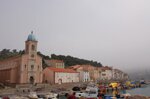 James I, the "Conqueror", bequeathed the Balearics, Montpellier, Cerdagne, and Roussillon to his son in 1272. He insisted his son build a port at Portus Veneris.
After the death of James I in 1276, the kingdom of Majorca was unified, and the work was successfully completed by King James II of Majorca. Unfortunately, the port fell into ruin at the end of the 9th century, and wasn’t revived until the 17th century. On 7 November 1659, Louis XIV of France and Philip IV of Spain sent their Prime Ministers—Mazarin and Don Luis de Haro respectively—to sign the Treaty of the Pyrenees, bringing thirty years of French-Spanish fighting to an end.
The location of Port Vendres' harbour interested Louis XIV greatly. This natural haven, near the Spanish border, turned out to be the only deep-water port on the coast. The king classified Port Vendres as a naval base, once the fortifications by Vauban in Collioure were completed. The work began under the supervision of Marshal de Mailly during Louis XIV's reign. He had the old harbour basin dug out and the Collioure road built. The king's architect, de Wailly, drew up the plans for Place Royale, where the obelisk would later stand. The improvements continued—the monumental staircase, the fountains, the obelisk, the two squares, and the dome—but now dedicated to the glory of Louis XVI. All the monuments and developments were inaugurated on the eve of the French Revolution. Port Vendres did not escape the turmoil of 1789, nor the Spanish invasion, which the city repulsed in 1794. The city signed a peace treaty and resumed its increasing activities. In 1823, it obtained the status of a free and independent municipality.
 France began to colonise Algeria in 1830. To address the growing traffic, extension and improvements were undertaken in the port. The jetty, Place Castellane, and Fort Béar sprang up. Trains began making stops in Port Vendres in 1867. As a result, the city became one of the important ports for Mediterranean sea trade. The volume of passengers and goods kept increasing until the start of the Second World War. A steamer connection was set up in 1885.
In 1944, the Germans blew up the port before falling back. It was rebuilt as soon as hostilities ended, and it prospered until 1962, the year of Algerian independence. The Port Vendres/North Africa route had the reputation for being "the shortest crossing in the calmest waters". Algeria's independence and the sudden return of the French from Algeria dealt a fatal blow to the port's activities. But although Port Vendres lost its capabilities of previous years, it remained a colourful and typically Mediterranean port, combining sailing, fishing, and trade. It is now a pleasant port of call, offering accommodation options, which remain extremely rare in Collioure and Banyuls.


