Navigation
Méditerranée

Navigation
Diaporama
Navigation




Sausset les Pins-Industrious father, prodigal son
Yachtsmen know the main landmark at Sausset les Pins. It's a white chateau build by nineteenth-century industrialist Charles Roux. His son Jules, became well known as a philanthropist and remains a character that marked the town.
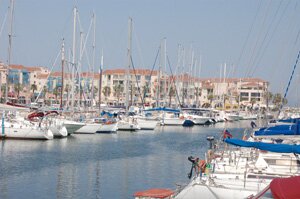
 Sausset les Pins is a pretty little fishing port on the Côte Bleue, surrounded by the typical limestone hills and pine groves. This village, only 40 km (25 miles) from Marseilles, started life as a tiny hamlet, before developing into a family seaside resort.
In the midst of the green pines nestles a grand-looking white chateau. This surviving landmark from a bygone industrial age has become a local emblem.
In 1854, a wealthy Marseilles soap and oil manufacturer and trader, Jean-Baptiste Charles-Roux bought a 300 ha (740 acre) estate in the midst of Sausset's pine groves. He had this "folly" built in 1855. The property was built so high that it can be used as a landmark for boats approaching the shore. It was created for show, but also for visibility. Jean-Baptiste Charles-Roux wanted to be able to see his chateau whilst working at his office in Marseilles. A provençal Citizen Kane with his Xanadu estate…
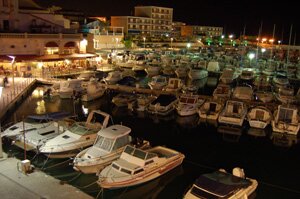 Whilst Jean-Baptiste left his mark on Sausset's skyline, his son Jules Charles-Roux left a mark on people's hearts through his generosity. He made a gift of the olive grove around the natural cove which has become the mouth of today's harbour at Sausset les Pins. Sausset residents are still enjoying the benefits of Jules Charles-Roux's largesse. The primary school in Sausset, the senior citizen's social club, and the Ferme Neuve, currently used as the local council and town hall are all built on land he donated.
The name of Jules Charles-Roux still gets people talking even today.It is all because of two harbour side plots, on which the sailing club and a public car park stand. They were given to the town in the 1920s by the prodigal son, but the Aix-en-Provence mortgage registry had lost all trace of the donation. On paper, the plots had remained the legal property of the Charles-Roux family. In 2007, after all the legal shenanigans imaginable, Sausset's senior citizens were called on to testify that the donation had indeed been made, and the land was finally registered as belonging to the town council.
 But no one is ever loved by everyone… especially when it comes to family affairs. Historian René Tellène tells of Jules extravagant parties at the chateau, when he invited artist friends such as Provençal poet Frédéric Mistral. He supported the Félibrige movement, which aimed to rehabilitate the local Provençal language as a literary idiom. "Jules Charles-Roux is a poet at heart. He likes to support artists. They come to stay at his chateau. But his generosity is not appreciated by all his descendants. Author Edmonde Charles-Roux (Ed: his granddaughter), who chairs the Goncourt literary prize committee, cannot stand for anyone mentioning Sausset les Pins."
After Jules' death, the chateau was sold off as apartments in 1931. The structure of the building has not been altered in any way and the flats give an authentic 'period' feel. Visitors are met by a gigantic marble staircase in the entrance hall. The grandeur of the setting means the prices are sky high. Part of the 300 ha estate was sold off in 1978, and three residential estates were built amongst the pine trees "These are the neighbourhoods that everyone in Sausset considers to be the most chic," says Martine Herrera from the local tourist board. The benefactor of Sausset les Pins is now remembered with a street name in his honour.
- Marilyn Beaufour

