Navigation
Méditerranée

Navigation
Diaporama
Navigation


Côte bleue-The sea park
Protecting the factory which manufactures fish
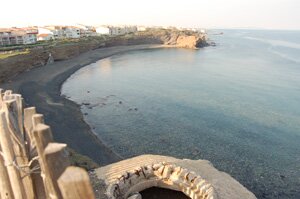
The Blue Coast’s (The Blue Coast is a rocky, pine-covered peninsula overlooking the Mediterranean just to the west of Marseilles) Sea Park is an example of the very best techniques available: while accepting a high number of tourists and pleasure boat activities, the protection measures implemented have produced a magnificent marine production tool which can be enjoyed by all.
 The appeal of the Blue Coast for Marseilles people has already been proven. Whilst the calanques (deep narrow creeks) are often difficult to access, an expressway and fifteen train rotations per day are able to transport the floods of tourists to the area.
A survey in 2005 estimated that more than 52,000 tourists had stayed on the coast, without counting “day-visitors”…
And on the last count 8,310 people are believed to have spent the day on thecoast's beaches on 17 August 1993. The number of tourists increased six-fold over the following ten years. Current figures estimate that there are approximately 50,000 bathers on a standard summer day!
Boats mooring in the ports have not been outdone. Ports are able to accommodate nearly 2,000 berths, 97% of which are for pleasure-boaters. Carro, Sausset, Carry and La Redonne have a total of 1,400 moorings with only sixty of these for visitors. But ten shelter ports can accommodate nearly 800 small boats.
As a consequence, the coasters with their anchors and their chains, the swimmers, divers, fishermen, gathers of sea urchins, coral and shellfish have ended up putting unbearable pressure on the surroundings. The coast is also subject to the same treatment (see previous page). On land like underwater, the same problems require the same remedies: protection.
The Blue Coast’s Sea Park was created in 1993; three years after the first purchases were made by the Coastline Conservatory (Conservatoire du Littoral). It manages, amongst other activities, two zones at Carry le Rouet and at Cap Couronne, which are strictly forbidden to visitors. The challenge is of prime importance: the Blue Coast is home to a vast quantity of treasures.
The objective is not to create a sanctuary for scientists or a museum for nature lovers. The idea is to preserve this “factory” of sea products which can be sold by a professional fisherman or eaten by a tourist.
This manufacturing process is a combination of tools which work together in harmony. First of all there are the Posidonia beds. This is not seaweed, it is grass – in the past it was pasture land for buffalos which was covered by water when the sea rose? – which has bright yellow flowers in the spring. The Posidonia beds can reach a depth of 30 m and cover approximately 55% of the rocky substratum and 85% of the sandy substratum: a stretch of land representing a thousand hectares – the largest in the Bouches du Rhône. It is the central Mediterranean ecosystem – a combination of a spawning ground and nursery – and home to 25% of the species known. It constitutes a biodiversity zone.
In the summer, the young mullet, soles, gurnards, pipers, pandora and sea bream feed on the small worms, shellfish and molluscs which are hidden in the sandy bottom. In the winter, the sardines gather there before swimming out to the open sea. In the spring, shoals of sand eels spawn on the edge of the sea grass.
A number of seaweed are able to develop on the lighter area of the smaller rocky beds while fixed animals predominate in the shadier zone. These rocky zones provide a home and shelter for invertebrate and vertebrate fauna. They are the favourite area for young fish species in a superficial zone. They are able to find food in abundant quantities, an environment which is not very deep but well oxygenated and a host of places to hide from predators.
There are numerous fish in the zone: a list of 200 species belonging to 77 families has been drawn up including dogfish, anglerfish, sole and grouper (which is a protected species), and also sea wolf, mullet, goldline, brown meagre (which is a historic species), sea bream, white bream, zebra sea bream, vérade, annular sea bream, sharp-shout sea bream, rainbow wrasse, comber, red mullets, brown wrasse, lasagne, axillary wrasse and scorpion fish. The majority of these species are of commercial interest for fishing. As even though fishermen no longer have the right to fish in the protection zones, fish on the other hand ignore the existence of boundaries.
A recent study has shown that “after eight years of protection, there has been an increase in the quantity and individual size of the most sought-after fish, that the number of species has risen, that the densities of fish have evolved outside of the reserve and that the average weight of the fish caught and the biomass fished have been respectively multiplied by 2 and 4”.
So, when somebody tells you not to drop anchor in order to protect the Posidonia beds, think about the next fish meal that you will be able to enjoy…
Christophe Naigeon


