Navigation
Méditerranée

Navigation
Diaporama
Navigation


La Grande Motte-Construction of the port of La Grande-Motte
a trip down memory lane…
A huge building site and a wholesome family approach characterised the period when La Grande-Motte came out from the marshes at the end of 1968. A trip down memory land for an assistant to the port master who has been practically present since the beginning of the adventure.
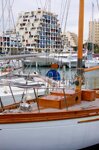 It was quite a building site! "When I took up my position in 1977, the construction of the port had already begun. Indeed, it never really finished. Over the years, we added pontoons and facilities. There are always extensions to be added", remembered Pierre Penas, assistant to the port master and technical manager of the port of La Grande Motte. The large pyramid-shaped buildings had already been built. But Pierre Penas saw the construction of all the western side, towards the discotheque La Dune and the port. "It was quite a building site. There was a wholesome family-based feel to the place, which has been lost today. In the morning, before getting the boats out, we all drank a cup of coffee together. People from outside of the town and tourists from all countries mixed with the locals", explained Pierre Penas.
 Initially the port was to accommodate 1,000 boats but it was inundated with requests at the end of the construction (today 1,500 boats are moored in the port and it intends to add another 800). La Grande-Motte was a chic, upmarket seaside resort in the Languedoc-Roussillon region and was much appreciated by Parisians. At the end of the 1970s, famous people had their rings in the port. "We launched the boats of Thierry Lhermitte, Jean-Pierre Foucault and Jean-Louis Trintignant " (well-known celebrities in France), remembered Pierre Penas.
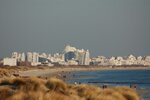 The port, which had a depth of between 3 to 4 metres, accommodated yachts, the biggest of which reached 55 foot. Sail ships and small motorboats shared the use of the docks equally. About 70% of the people are from the area, from the Gard or the Hérault mainly but also from the Vaucluse and the Bouches du Rhone", pointed out Eric Pallier, master of the port, who added that "there has always been an international clientele even at the very beginning, in particular Belgians, Germans and English".
As in all recently-built ports, the technical area, which was intended to be comfortable and well stocked, is particularly appreciated.
La Grande Motte was part of the six ports from the Languedoc which stemmed from the ‘Mission Racine’, (an inter-ministerial tourist development programme of the Languedoc-Roussillon coastline) which was set up in the 1960s to favour seaside tourism in the Gulf of Lion and which aimed to avoid the construction of concrete cubes along the coast.
The resort came out from the marshes. It was a technical feat.
For its architect, Jean Balladur, it is as much a town to be lived in as an object of art to be admired. Living at the Grande Motte is living in a sculpture. Of course, you either like the aesthetics of the seventies or you don’t. But, either way, it cannot be denied that this town did not stem from the sale of plots to promoters who, as is generally the case, paid no concerns to the harmony of the town as a whole.
 Here, there is an architectural and urban concept. Inspired from the Teotihuacan Inca temples in Mexico and from the Saint Loup Peak which is to be found further inland to the north, the pyramids of La Grande Motte play with the horizontal line of the coast and the distinctive colours of the Mediterranean. Views of the sea, of Carnon beach or Grau du Roi, at sunset are particularly outstanding.
The urban project was also a success: La Grande Motte is not only a holiday town which is empty during the winter like most of the seaside resorts and "feet-in-the-water" marinas. It is a lively commune with close on 7,000 inhabitants. It has an efficient public transport system and is easily accessible by road. It is also a university town for a number of students from Montpellier who find rental accommodation in the La Grande Motte during the nine months of the low season which is becoming livelier and livelier.


