Navigation
Méditerranée

Navigation
Diaporama
Navigation



La Nautique-When the vineyards stopped producing, pontoons started springing up…
A handful of merchants and wine-growing estate owners created the Société Nautique de Narbonne (the Narbonne Nautical Company) in 1907 on the Bages/Sigean lake. Thanks to the work of these "nauticards" (the members of the Société Nautique de Narbonne) the lake opened up to pleasure boating. The Société Nautique, which owns the concession of the port until 2028, is renowned for its sailing activities.
In 1907, there were rumblings of rebellion in the wine-growing industry. The wine was no longer being bought. Some merchants and wine-growing estate owners decided to develop a simple quay for small craft on a reed bed, on the exact location of a former Roman port in the Bages (or Sigean depending on where you are…) Lake, near to Narbonne. The Société Nautique de Narbonne was created. It is the oldest company just behind Sete’s.
At the beginning of the 20th century, mosquitoes were rife in the region. This group of men, who were true pioneers, dug out a small channel with spades and built a wooden pontoon, despite the heat and swarms of mosquitoes. The work was carried out in a friendly and simple manner, with a good team and camaraderie spirit. Pierre Dejean, who was President of the company from 1964 to 2006, took part in the building of the first quays using a pickaxe. His hands were covered by gloves which had been made in old inner tubes. He built a dredger to clean out the port with material he had recovered. And finally he made the "pile driver" which he knocked together with chimney pipes from an oil-fired boiler. This instrument was used to plant stakes in the mud. He summed up the situation quite succinctly: "Here, we always helped each other".
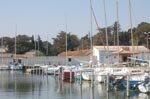
As soon as the work was finished, the lake was opened up for pleasure boating. The first official regatta was organised in 1912. This is not the America’s Cup by any stretch of the imagination: the boats were fishing boats which had been specially rigged for the occasion. Over the following years, the fleet became more modern. The "nauticards", as they were called, saw the arrival of sailing dinghies: the Canetons (small craft) and the Vauriens (yachts). Which were followed by boats which were fit for habitation: Corsairs, Beluga boats and Grondins. The Société Nautique de Narbonne organises three French championships and a regatta takes place each month, in particular for children on Optimist beginner boats.
So, despite modest beginnings during which the nauticards were nicknamed "bathroom racing yachtsmen" by other maritime clubs, the Société Nautique and the Bages Lake have gradually become renowned for their sailing activities.
The company was structured and obtained the concession of the marina and maritime services until 2028. The port is always full of boats: there are currently 500 members for 258 berths on the water and 150 on land. There is a majority of yachts. A rule has been in place since 1970: Each nauticard has to work for six half-days each year for the Société Nautique. If one of them does not do, he is required to pay.
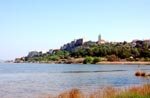
The success of the port has not affected the spirit of sharing which is passed on from one year to the next. From the politician to the bricklayer, all members talk to each other, dry their sails together or wash the decks side by side. Everybody meets up for a drink at the clubhouse to talk about the outings that particularly struck them or to remember the local sayings. Here are some of the local sayings which have been drawn up by four generations of "nauticards": "If you listen to the weather forecast you’ll spend your life at the pub!" or "If it rains on the Aute, play belote".
Apart from the competitions that are organised, the Sigean Lake (or Bages Lake depending on where you are) also offers a host of things to discover. The water area has a number of islands, like the marvellous island of Sainte Lucie which is inhabited by roe deer, coves, creeks and huge reed beds, which are a bird’s paradise. Not far are the picturesque villages of Peyrac de Mer and Bages and the old fishermen’s hamlet of Nadière, which has now been deserted. A never-ending adventure.


